The global luxury fashion market continues to grow as brands invest in stronger visual storytelling across physical and digital spaces. Bain & Company reports that shoppers increasingly expect consistent brand experiences wherever they interact with a label, whether inside a boutique, at a fashion event, or online. While digital channels receive much of the attention, printed visuals remain an important part of that experience. Fashion companies continue to use professionally produced posters to communicate identity, launch new collections, and create memorable retail environments. Businesses looking for inspiration on commercial print applications often explore poster printing industry city, which demonstrates how large-format print supports visual branding across different industries. Rather than replacing digital marketing, printed displays often work alongside it to create a cohesive customer journey.
Visual identity goes beyond a recognizable logo. It includes color palettes, typography, photography, layouts, and the overall mood a brand presents to its audience. Every printed poster, storefront display, and campaign graphic contributes to that identity. The most successful fashion brands understand that consistency builds familiarity, and familiarity often leads to trust.
1. Creating a Consistent Brand Identity Across Every Touchpoint
Strong branding begins with consistency. Fashion companies carefully apply the same visual language across websites, social media, packaging, advertising, and physical retail spaces. Posters help extend that identity into environments where customers experience the brand in person.
McKinsey & Company has highlighted that consumers increasingly value seamless experiences across multiple channels. When shoppers recognize familiar colors, fonts, and imagery in every location, the brand feels more established and reliable. Printed campaign materials therefore become another piece of a much larger branding strategy.
This approach is especially valuable during product launches and seasonal collections. A customer who first discovers a collection online should immediately recognize the same campaign imagery when walking past a boutique window or attending a promotional event.
2. Turning Store Windows into Powerful Brand Statements
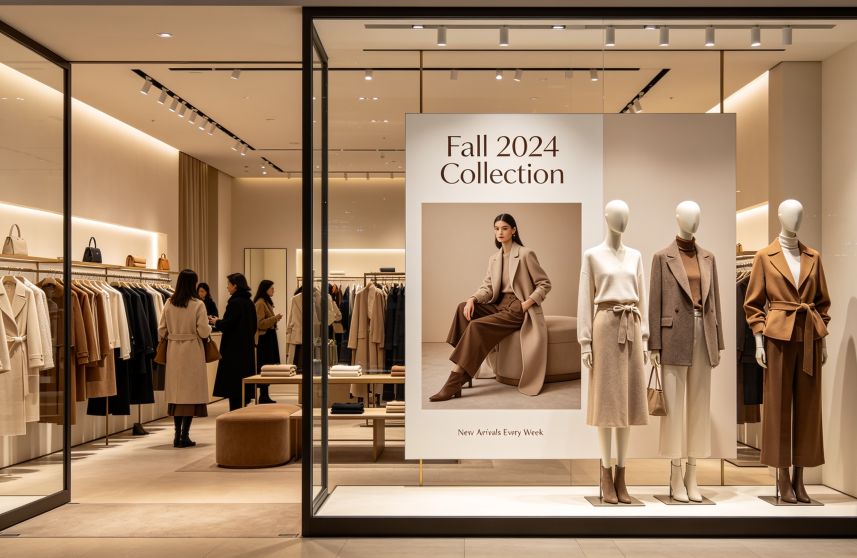
Retail windows remain one of fashion’s most influential marketing spaces. Before customers enter a store, the storefront communicates the personality of the brand. Large-format posters allow retailers to introduce new collections, highlight limited editions, or reinforce seasonal themes without permanently changing store interiors.
Research published by the International Council of Shopping Centers (ICSC) shows that attractive storefront displays continue to influence shopper behavior by encouraging visitors to enter retail locations. While window design includes lighting, mannequins, and fixtures, oversized graphics often provide the visual focal point that captures attention from a distance.
Luxury brands frequently change these displays several times each year. Fresh visuals help maintain customer interest while ensuring that every campaign reflects current fashion trends and product launches.
3. Supporting Fashion Campaigns Beyond Social Media
Fashion marketing rarely depends on a single platform. Consumers may first encounter a campaign on Instagram, later see an email promotion, and eventually visit a physical store. Printed promotional graphics help connect those experiences by presenting the same imagery across different channels.
Deloitte notes that modern consumers move fluidly between digital and physical shopping experiences. Because of this behavior, successful retailers increasingly build integrated marketing campaigns rather than treating online and offline promotion as separate activities.
Printed visuals remain valuable because they offer permanence. Unlike social media posts that disappear within hours or days, professionally displayed campaign graphics stay visible throughout an entire collection launch, reinforcing the brand message every day.
4. Showcasing Fashion Photography at Its Best
Photography sits at the heart of fashion communication. Every campaign image tells a story about craftsmanship, style, and aspiration. Large printed displays allow those photographs to be appreciated in ways that small mobile screens often cannot match.
The British Fashion Council regularly emphasizes the importance of visual presentation in building creative brands. High-resolution photography, thoughtful composition, and careful lighting all contribute to how audiences perceive clothing collections. High-quality print production preserves those creative details while maintaining accurate colors and sharp image quality.
Designers and creative directors often collaborate closely with photographers, stylists, and graphic designers to ensure that every campaign maintains a consistent artistic direction. The final printed display becomes an extension of the creative process rather than simply another advertisement.
5. Building Memorable Experiences at Fashion Events
Fashion extends beyond the sales floor. Runway presentations, trade shows, pop-up stores, product launches, and designer exhibitions all rely on strong visual communication to create memorable experiences. Visitors often form their first impression long before they interact with a product, making event graphics an important part of the overall presentation.
The Council of Fashion Designers of America (CFDA) frequently highlights how fashion events combine creativity, storytelling, and brand identity to connect with audiences. Printed visuals help reinforce those themes by guiding visitors through a venue, introducing collections, and creating recognizable spaces for photography and media coverage.
Well-designed promotional displays also encourage visitors to share images on social media. As a result, physical marketing materials often continue reaching audiences long after an event has ended, extending the campaign’s visibility beyond the venue itself.
6. Using Typography and Graphic Design to Strengthen Recognition
Every fashion brand develops its own visual language. Typography, spacing, color combinations, and layout choices all influence how customers perceive a company. A luxury label may prefer elegant serif fonts and generous white space, while a contemporary streetwear brand might use bold lettering and vibrant graphics.
The American Institute of Graphic Arts (AIGA) notes that typography plays an essential role in communication because it shapes readability while expressing personality. Fashion marketers often rely on these design principles to ensure printed materials remain visually appealing without overwhelming the audience.
Successful campaign graphics balance creativity with clarity. A striking design may attract attention, but clear messaging ensures shoppers understand the collection, promotion, or event being advertised. Consistent design choices across brochures, retail displays, window graphics, and large-format promotional materials help strengthen long-term brand recognition.
7. Adapting Poster Designs for Seasonal Collections
Fashion constantly evolves. New colors, fabrics, and silhouettes appear every season, and marketing materials need to evolve alongside them. Refreshing campaign visuals helps brands remain relevant while keeping their identity recognizable.
WGSN, a global trend forecasting company, explains that fashion businesses regularly plan creative campaigns months before seasonal collections reach stores. This preparation allows designers, photographers, marketers, and production teams to develop coordinated visuals that support each launch.
Seasonal print campaigns give retailers flexibility. Storefront displays, promotional graphics, and exhibition materials can be updated to reflect new collections without changing the core identity that customers already recognize. The result is a brand that feels fresh while remaining familiar.
8. Investing in Sustainable Print Solutions
Sustainability has become an increasingly important consideration across the fashion industry. Consumers now pay closer attention to how products are made, packaged, and promoted. Marketing materials have become part of that conversation.
The Ellen MacArthur Foundation continues to encourage businesses to adopt circular economy principles that reduce waste and improve resource efficiency. Print providers have responded by offering recycled papers, responsibly sourced materials, water-based inks, and production methods designed to minimize environmental impact.
Fashion companies increasingly view environmentally responsible printing as an extension of their broader sustainability commitments. Choosing durable materials, planning campaigns carefully, and reducing unnecessary waste allow brands to support both creative goals and environmental responsibility.
RELATED ARTICLE: Designer Moments | How Step & Repeat Banners Reflect Brand Aesthetics in NYC Fashion Spaces
Conclusion
Fashion has always depended on strong visual communication. While digital marketing continues to evolve, physical branding remains an essential part of how consumers experience a fashion label. Retail displays, event graphics, campaign photography, and thoughtfully designed promotional materials all contribute to a consistent identity that customers can recognize and remember.
The most successful brands understand that effective visual communication rarely depends on a single marketing channel. Instead, they combine digital content with professionally produced print displays to create a seamless experience across retail spaces, events, and online platforms. This balanced approach allows every customer interaction to reinforce the same creative vision.
As consumer expectations continue to evolve, fashion businesses are likely to invest in smarter design strategies, sustainable production methods, and high-quality large-format printing that reflects their brand values. When creative direction, thoughtful design, and quality commercial print production work together, they help transform simple promotional materials into lasting expressions of visual identity.